
EPILEPSY SURGERY
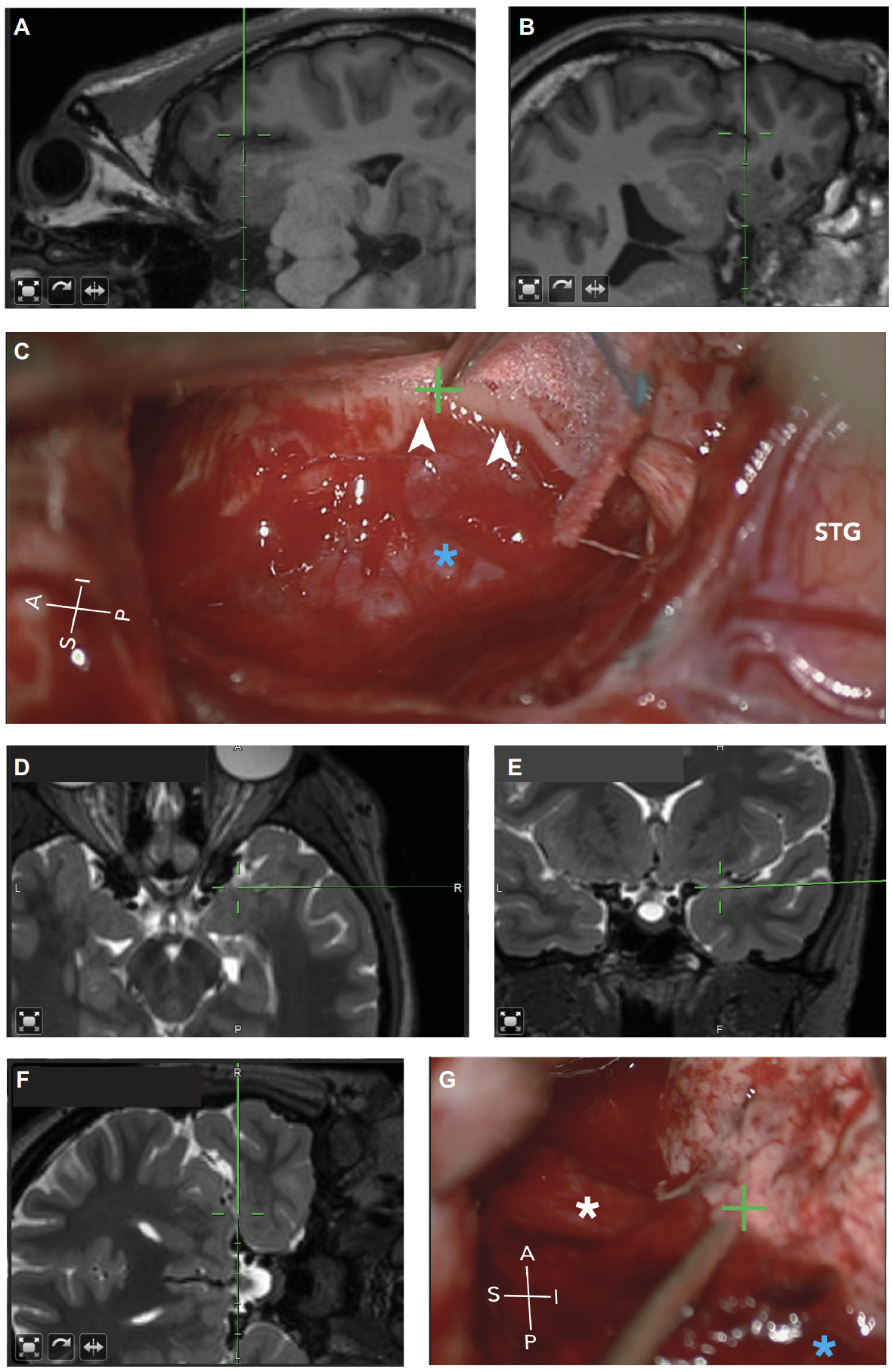
The Brain Modulation Lab has contributed to advancing both resective and neuromodulatory surgical approaches for drug-resistant epilepsy. In the domain of temporal lobe epilepsy surgery, we developed and reported a standardized extrapial hippocampal resection technique for anterior temporal lobectomy, demonstrating in a 62-patient case series that this approach yields seizure freedom rates of 79% (follow-up <3 years) and 52% (follow-up >3 years), with a low complication rate and consistent recovery of en bloc hippocampal specimens suitable for translational research (Hussein et al., Operative Neurosurgery, 2021). We also demonstrated that intracranial monitoring equalizes seizure outcomes in patients with nonconcordant presurgical data, with SEEG being the only approach used for bilateral or poorly lateralized temporal lobe epilepsy and resulting in 77.8% seizure freedom, notably with 85% of SEEG patients having their primary surgical hypothesis modified by the intracranial data (Sokolov et al., Epilepsia Open, 2022). Mike Modo’s lab at the University of Pittsburgh leveraged en bloc hippocampal specimens generated by the extrapial technique, to perform ex vivo mesoscale diffusion MRI that bridges the gap between macroscopic imaging and microscopic histopathology. This work began with the first demonstration that aberrant mossy fiber connections (a putative substrate for reverberant excitatory circuits in mesial temporal sclerosis) could be visualized using mesoscale diffusion MRI with histological validation (Modo et al., Human Brain Mapping, 2016), followed by systematic optimization of acquisition parameters for mesoscale hippocampal imaging (Ly et al., Human Brain Mapping, 2020) and the finding that intra-hippocampal diffusion metrics correlate with preoperative seizure frequency, providing a potential microstructural biomarker linking tissue pathology to clinical severity (Ke et al., Human Brain Mapping, 2020).
Our lab has been at the forefront of developing thalamic responsive neurostimulation (RNS) as a therapeutic strategy for drug-resistant epilepsy, beginning with the first use of bilateral centromedian (CM) thalamic RNS in a patient with idiopathic generalized epilepsy (IGE) in 2017. That index patient, a young woman with drug-refractory Jeavons syndrome (eyelid myoclonia with absences), experienced a reduction in daily absence seizures from a mean of 60 to fewer than 10, and notably retained awareness during residual episodes (Kokkinos et al., Neurosurgery, 2020). We subsequently reported an initial case series of four patients with pharmacoresistant IGE who underwent bilateral CM-region RNS implantation, achieving 75%–99% reductions in seizure frequency with decreased seizure duration and severity, and significant improvements in quality of life that were durable through at least two years of therapy (Sisterson et al., Journal of Neurology, Neurosurgery & Psychiatry, 2022). Most recently, we expanded this work in a multicenter cohort of 21 patients with drug-resistant generalized and multifocal epilepsy, including focal-to-bilateral tonic-clonic seizures, demonstrating an average seizure reduction of 82.6% for patients with at least one year of follow-up, with 18% achieving Engel class 1 outcomes and no patients classified as Engel class 4 (Nanda et al., Epilepsia, 2024). Our clinical collaborators also demonstrated the emergent use of RNS in the acute treatment of super-refractory status epilepticus, reporting the first case of focal motor epilepsia partialis continua successfully treated with responsive neurostimulation when all conventional medical interventions had failed (Yang et al., Annals of Clinical and Translational Neurology, 2021). Collectively, this body of work has contributed to a growing recognition that thalamic RNS can extend surgical treatment to patients with generalized and multifocal epilepsy who were not previously considered candidates for intracranial neuromodulation.
Our work has also advanced the broader conceptual framework for epilepsy surgery. Dr. Richardson has articulated a paradigm shift from traditional focus-oriented surgical philosophy to a network-oriented approach, explaining that all patients with drug-resistant epilepsy are potential surgical candidates and that stereoelectroencephalography (SEEG) should be reconceived as a network-discovery platform that informs both resective and neuromodulatory strategies (Richardson, Neurological Clinics, 2022). We further contributed to the field's understanding that epilepsy surgery, including neuromodulation, can improve not only seizure control but also neurodevelopment in children with epileptic encephalopathies, providing evidence that surgical intervention should be considered earlier in the disease course to maximize cognitive outcomes (McLaren et al., Neurosurgery Clinics of North America, 2024). He further explained that hypothesis-driven thalamic SEEG should be integrated into routine clinical practice — rather than treated as research — to enable individualized identification of optimal neuromodulation targets, given that empirical data now demonstrate substantial and durable seizure reduction across multiple thalamic nuclei (Richardson, Brain, 2026).
Across these lines of investigation, our program has sought to broaden the scope of who is considered a surgical candidate and how surgical decisions are made. Together with the conceptual shift toward network-oriented epilepsy surgery, these efforts address a longstanding problem in the field: epilepsy surgery remains substantially underutilized despite strong evidence of efficacy, in part because many patients with drug-resistant epilepsy do not fit the traditional model of a resectable focal lesion. By expanding both the technical repertoire and the conceptual framework for surgical intervention, this body of work contributes to ongoing efforts to close the treatment gap for patients with medically refractory epilepsy.
Specific afterdischarge properties can enhance the clinical utility of electrical stimulation mapping during intracranial monitoring
Kons ZA, Kokkinos V, Hadanny A, Muñoz W, Sisterson N, Simon M, Urban A, Richardson RM. Clinical Neurophysiology. 2024
Evolution in Epilepsy Surgery and the Need to Address a Public Health Crisis of Underutilization
Richardson RM, Yang JC. Neurosurgery Clinics. 2024
Evolution of Stereo-Electroencephalography at Massachusetts General Hospital.
Nanda P, Richardson RM. Neurosurgery Clinics. 2024
Implantation accuracy and operative variables in robot-assisted stereo-electroencephalography.
Lee SJ, Lee PS, Faraji AH, Richardson RM, Kokkinos V. J Neurosurgery. 2023
Closed-loop brain stimulation and paradigm shifts in epilepsy surgery
Richardson RM. Neurologic Clinics. 2022.
Hippocampal spindles and barques are normal intracranial electroencephalographic entities
Kokkinos V, Hussein H, Frauscher B, Simon M, Urban A, Bush A, Bagić AI, Richardson RM. Clinical Neurophysiology. 2021.
Intracranial monitoring contributes to seizure freedom for temporal lobectomy patients with non-concordant pre-operative data
Sokolov E, Sisterson ND, Hussein H, Plummer C, Corson D, Antony AR, Mettenburg J, Ghearing G, Pan J, Urban A, Bagić A, Richardson RM, Kokkinos V. Epilepsia Open. 2021.
Extrapial Hippocampal Resection in Anterior Temporal Lobectomy: Technical Description and Clinical Outcomes in a 62-Patient Case Series
Hussein H, Kokkinos V, Sisterson ND, Modo M, Richardson RM. Operative Neurosurgery. 2021.
Expert-Level Intracranial Electroencephalogram Ictal Pattern Detection by a Deep Learning Neural Network
Constantino AC, Sisterson ND, Zaher N, Urban A, Richardson RM, Kokkinos V. Frontiers in Neurology. 2021.
Ictal Onset Signatures Predict Favorable Outcomes of Laser Thermal Ablation for Mesial Temporal Lobe Epilepsy
Zaher N, Urban A, Antony A, Plummer C, Bagic A, Richardson RM, Kokkinos V. Frontiers in Neurology. 2020.
Ex Vivo Mesoscopic Diffusion MRI Correlates with Seizure Frequency in Patients with Uncontrolled Mesial Temporal Lobe Epilepsy
Ke J, Foley LM, Hitchens TK, Richardson RM, Modo M. Human Brain Mapping. 2020.
Mesoscale Diffusion Magnetic Resonance Imagine of the Ex Vivo Human Hippocampus
Ly M, Foley L, Manivannan A, Hitchens TK, Richardson RM, Modo M. Human Brain Mapping. 2020.
Interpretation of the Intracranial Stereoelectroencephalography Signal
Kokkinos V. Neurosurgery Clinics. 2020.
Neuromodulation of Epilepsy Networks
Sisterson ND, Kokkinos V. Neurosurgery Clinics. 2020.
Decision Making in Epilepsy Surgery
Richardson RM. Neurosurgery Clinics. 2020.
The Hippocampal Barque: An Epileptiform but Non-epileptic Hippocampal Entity
Kokkinos V, Richardson RM, Urban A. Frontiers in Human Neuroscience. 2020.
GABA Bouton Subpopulations in the Human Dentate Gyrus Are Differentially Altered in Mesial Temporal Lobe Epilepsy
Alhourani A, Fish KN, Wozny TA, Sudhakar V, Hamilton RL, Richardson RM. J Neurophysiology. 2019.
The Intracranial Correlate of the 14&6/sec Positive Spikes Normal Scalp EEG Variant
Kokkinos V, Zaher N, Antony A, Bagić A, Richardson RM, Urban A. Clinical Neurophysiology. 2019.
Association of Closed-Loop Brain Stimulation Neurophysiological Features With Seizure Control Among Patients With Focal Epilepsy
Kokkinos V, Sisterson ND, Wozny TA, Richardson RM. JAMA Neurology. 2019.
Closed-Loop Brain Stimulation for Drug-Resistant Epilepsy: Towards an Evidence-Based Approach to Personalized Medicine
Sisterson ND, Wozny TA, Kokkinos V, Constantino A, Richardson RM. Neurotherapeutics. 2019.
Effects of Hippocampal Low-frequency Stimulation in Idiopathic Non-human Primate Epilepsy Assessed via a Remote-sensing-enabled Neurostimulator
Wozny TA, Lipski WJ, Alhourani A, Kondylis ED, Antony A, Richardson RM. Experimental Neurology. 2017.
Detection of Aberrant Hippocampal Mossy Fiber Connections: Ex Vivo Mesoscale Diffusion MRI and Microtractography with Histological Validation
Modo M, Hitchens TK, Liu JR, Richardson RM. Humain Brain Mapping. 2016.
Short-term Neurocognitive Outcomes Following Anterior Temporal Lobectomy
Lee PS, Pardini J, Hendrickson R, Destefino V, Popescu A, Ghearing G, Antony A, Pan J, Bajic A, Wagner D, Richardson RM. Epilepsy and Behavior. 2016.
Sensing-enabled Hippocampal Deep Brain Stimulation in Idiopathic Nonhuman Primate Epilepsy
Lipski WJ, DeStefino VJ, Stanslaski SR, Antony AR, Crammond DJ, Cameron JL, Richardson RM. J Neurophysiology. 2015.
Detection of High-frequency Oscillations by Hybrid Depth Electrodes in Standard Clinical Intracranial EEG Recordings
Kondylis ED, Wozny TA, Lipski WJ, Popescu A, DeStefino VJ, Esmaeili B, Raghu VK, Bagic A, Richardson RM. Frontiers in Neurology. 2014.