Research.
NIH-funded research in speech production.
DBS offers the only opportunity to observe speech-related electrical activity directly within target areas of the brain called the basal ganglia and thalamus. Dr. Richardson's research team in the Brain Modulation Lab developed a way to do this while recording from the cortex, the outer command layers of the brain, at the same time. These studies, funded by the U.S. BRAIN Initiative, are improving our understanding of how the brain enables us to speak. We are grateful to patients for partnering with us to understand the human brain: how it works, and potentially how we can make it work better for patients with disorders that are treated with DBS.
Patients who volunteer for this study have their brain activity recorded with electrodes while they perform speech tasks during DBS surgery.
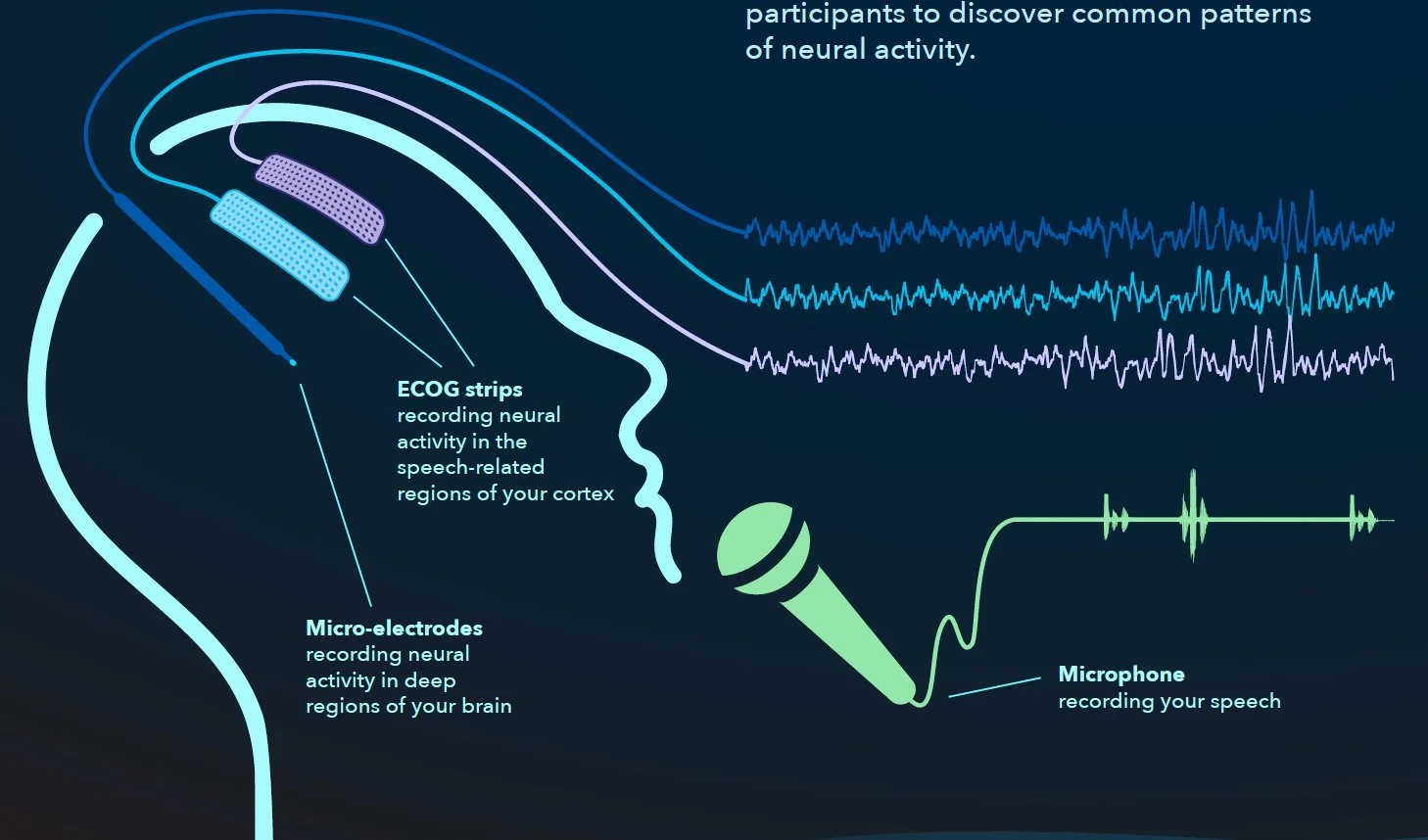
Recording speech-related brain activity. Electrodes record from the cortex and from the DBS target at the same time while patients perform speech tasks during surgery.
This research is funded by the U.S. BRAIN Initiative.
Gene and cell therapies: should I wait?
Dr. Richardson's PhD work was in cell transplantation for Parkinson's disease, and his postdoctoral research was in gene therapy for Parkinson's disease. He has served as a neurosurgeon on clinical trials of both cell and gene therapies and continues to be active in the development of biological therapies. These therapies hold promise for the future, but this kind of work takes decades to come to fruition. There are no biological therapies on the near horizon for which anyone who currently qualifies for DBS should wait, given how well DBS can improve quality of life.
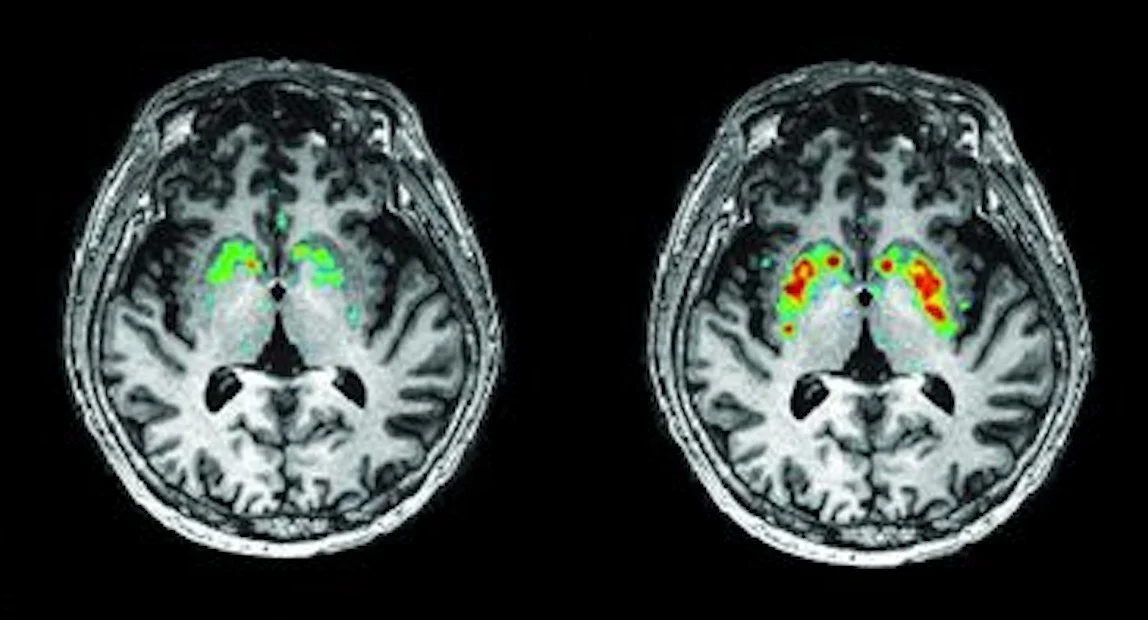
PET scans showing the putamen before and after gene therapy for Parkinson’s disease. From Richardson et al., 2022.