Deep brain stimulation: a guide for patients and families.
Deep brain stimulation (DBS) improves quality of life for people with Parkinson's disease, dystonia, and essential tremor whose symptoms are no longer well controlled by medication. This guide introduces the topics I discuss with patients during our introductory visits, introduces my team, and leaves you with resources to help you in your DBS decision-making.
A brief history of deep brain stimulation.
DBS is not a new therapy. The earliest studies of chronic brain stimulation began in the 1950s, in the United States. Our modern form of DBS therapy was created in the 1980s in Grenoble, France, starting with DBS of the thalamus in patients with tremor. The same group introduced subthalamic nucleus DBS in the early 1990s, for patients with Parkinson's disease. Functional neurosurgery, the specialty aimed at improving quality of life for people with chronic brain diseases, now has more than 30 years of DBS experience. The 30-year anniversary of subthalamic nucleus DBS was celebrated in Grenoble in June 2023.
How does DBS work?
Studies conducted in the operating room with DBS patients during test stimulation indicate that DBS works by reducing abnormally synchronous brain activity in loop circuits that connect cortical (outer) and subcortical (deep) areas of the brain responsible for specific types of behavior, such as control of movement. These areas usually coordinate their activity like sections of an orchestra, to produce fluid transitions between complex movements. Abnormally repetitive rhythms of electrical activity that disrupt this coordination are present in many brain diseases. DBS counteracts these abnormal brain rhythms, without affecting healthy brain activity, to reduce symptoms.
The DBS lead is implanted in a specific subcortical node of the relevant behavioral circuit: the subthalamic nucleus (STN) or globus pallidus (GP) for Parkinson's disease, the thalamus for tremor, or the nucleus accumbens for obsessive-compulsive disorder.
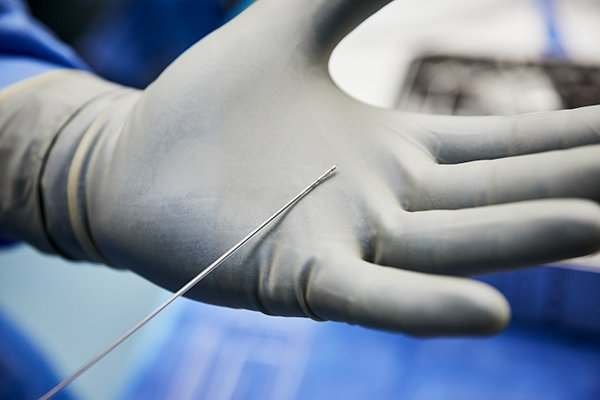
DBS is nondestructive, adaptable, and reversible. Leads are implanted on both sides of the brain during one minimally invasive procedure. The DBS lead is thin, only 1.3 mm in diameter. Stimulation is controlled by a pulse generator, a small computer and battery combined in one module, implanted in the right chest under the collarbone. Four stimulation parameters are set by the programming physician using an external programming device: intensity, frequency, duration, and location. DBS settings are programmed to optimize the "therapeutic window," the amount of stimulation that produces the best reduction in symptoms without significant side effects. We use DBS leads that allow us to "steer" the current in a shape that best fits the stimulation target.
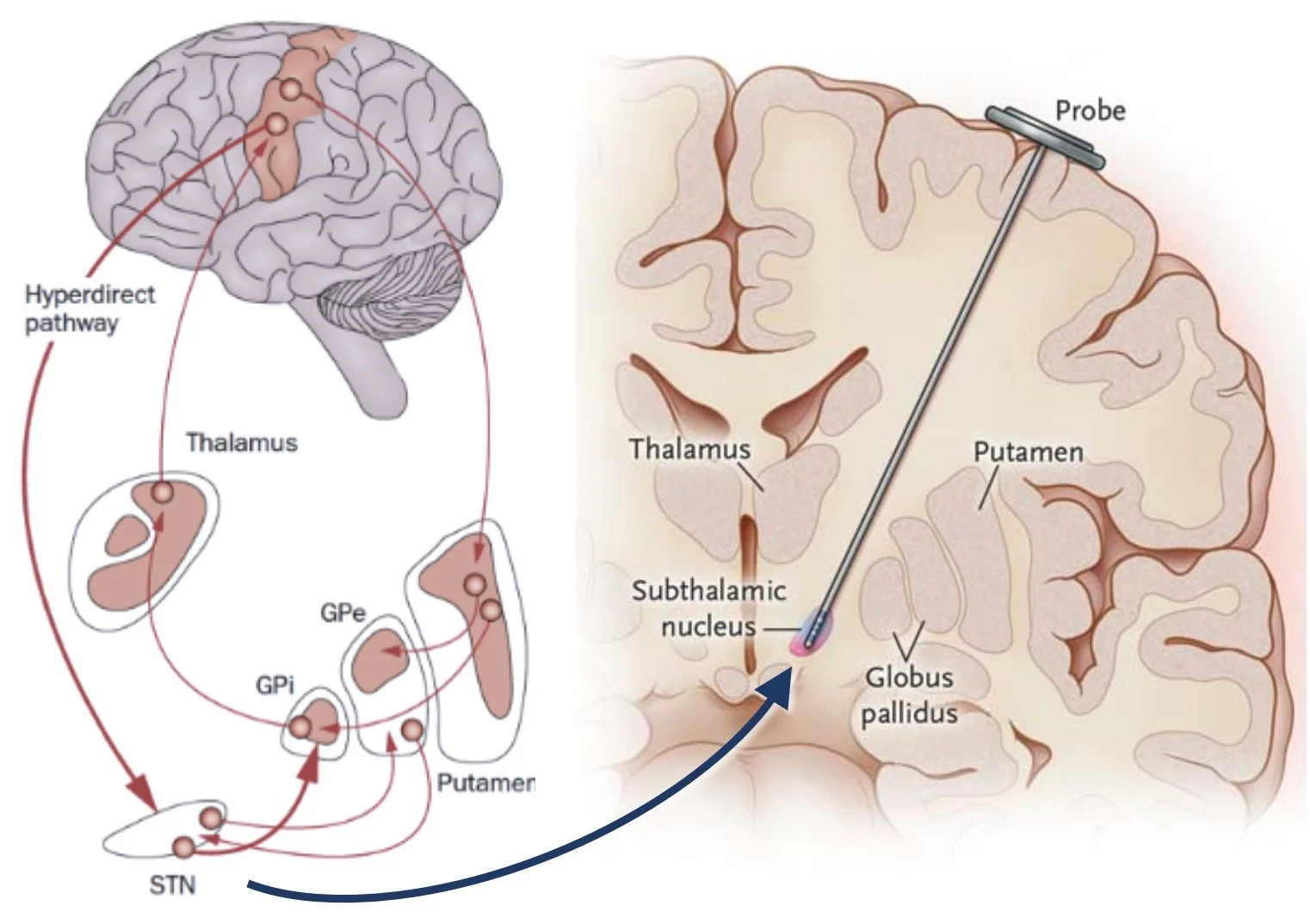
Basal ganglia-thalamus-cortex loop circuit. The left drawing shows the motor control circuit including the basal ganglia nodes STN and GPi. The right drawing shows a DBS lead implanted in the STN.
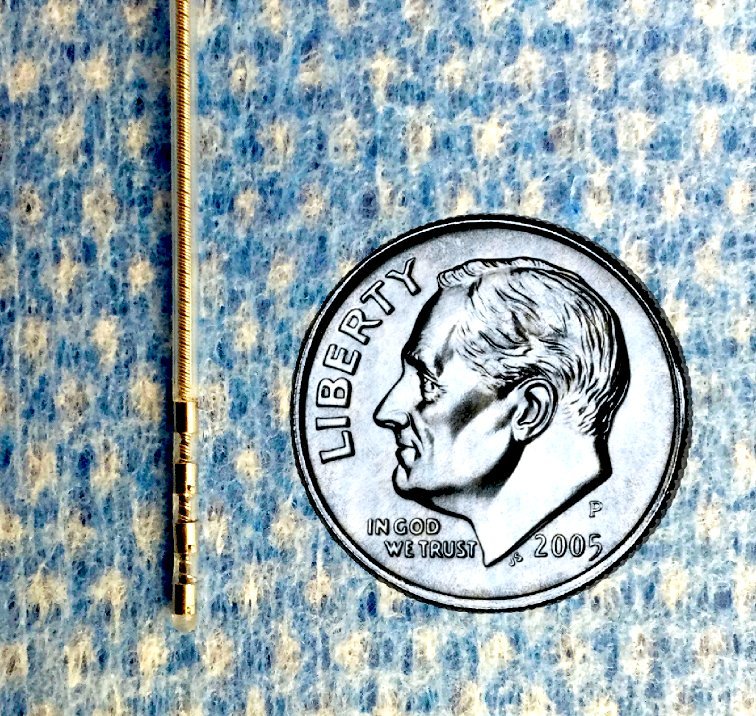
DBS lead. The DBS lead is thin, only 1.3 mm in diameter, shown here to scale with a dime.
Video. We use DBS leads that allow us to “steer” the current in a shape that best fits the stimulation target.
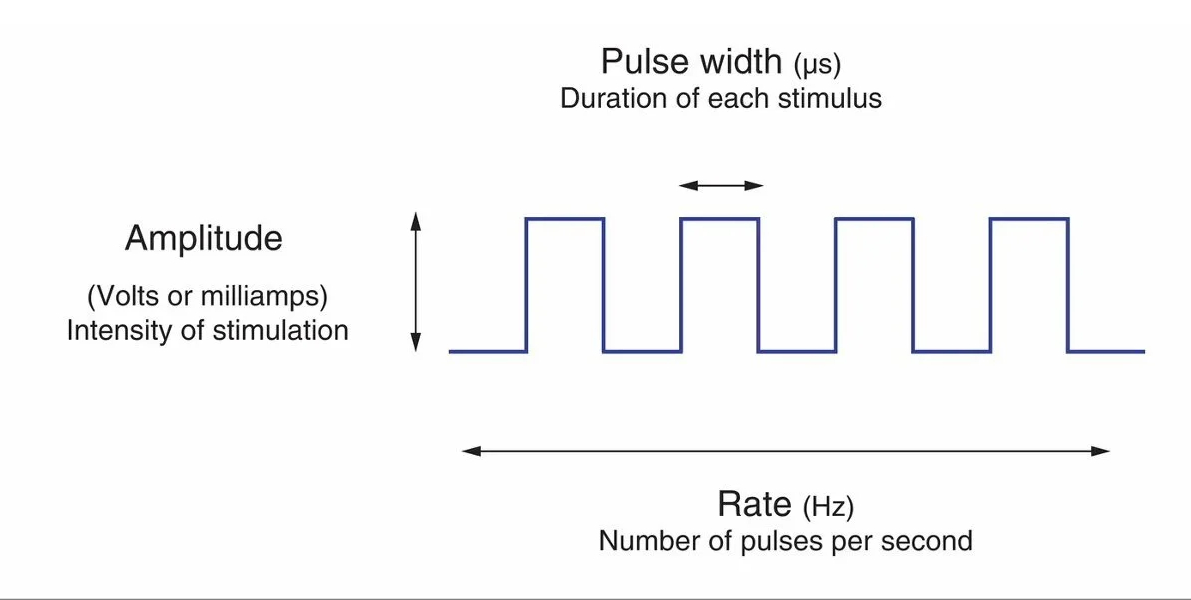
Stimulation parameters. The three settings we adjust are amplitude, pulse width, and rate.
DBS at the Massachusetts General Hospital.
Welcome to the DBS program at the Massachusetts General Hospital, one of the world's premier centers for neuromodulation. My own introduction to DBS came as a medical student in Virginia, and I have been hooked ever since, performing over 600 DBS cases in my practice so far. My PhD and postdoctoral research centered on two additional types of functional neurosurgery, cell transplantation and gene therapy, which are covered briefly in the research section of this guide. After residency training at the University of California San Francisco, I led the DBS program at the University of Pittsburgh Medical Center for 8 years. In 2019, I joined MGH to direct the division of Functional Neurosurgery. I am also a neuroscientist who founded the Brain Modulation Lab, which studies brain recordings from DBS and other types of implanted electrodes. Our work has received funding from the NIH every year since 2014.
My primary neurosurgical partner is Dr. Pranav Nanda, and we work closely with Dr. Jeff Schweitzer as well. On the neurology side, our partner is Dr. Todd Herrington, who leads a team of movement disorders DBS experts in our Department of Neurology, including Drs. Alice Flaherty, Nutan Sharma, and Emily Ferrence. Our goal is to provide DBS evaluation, surgery, and programming with a level of expertise that is among the best in the world.
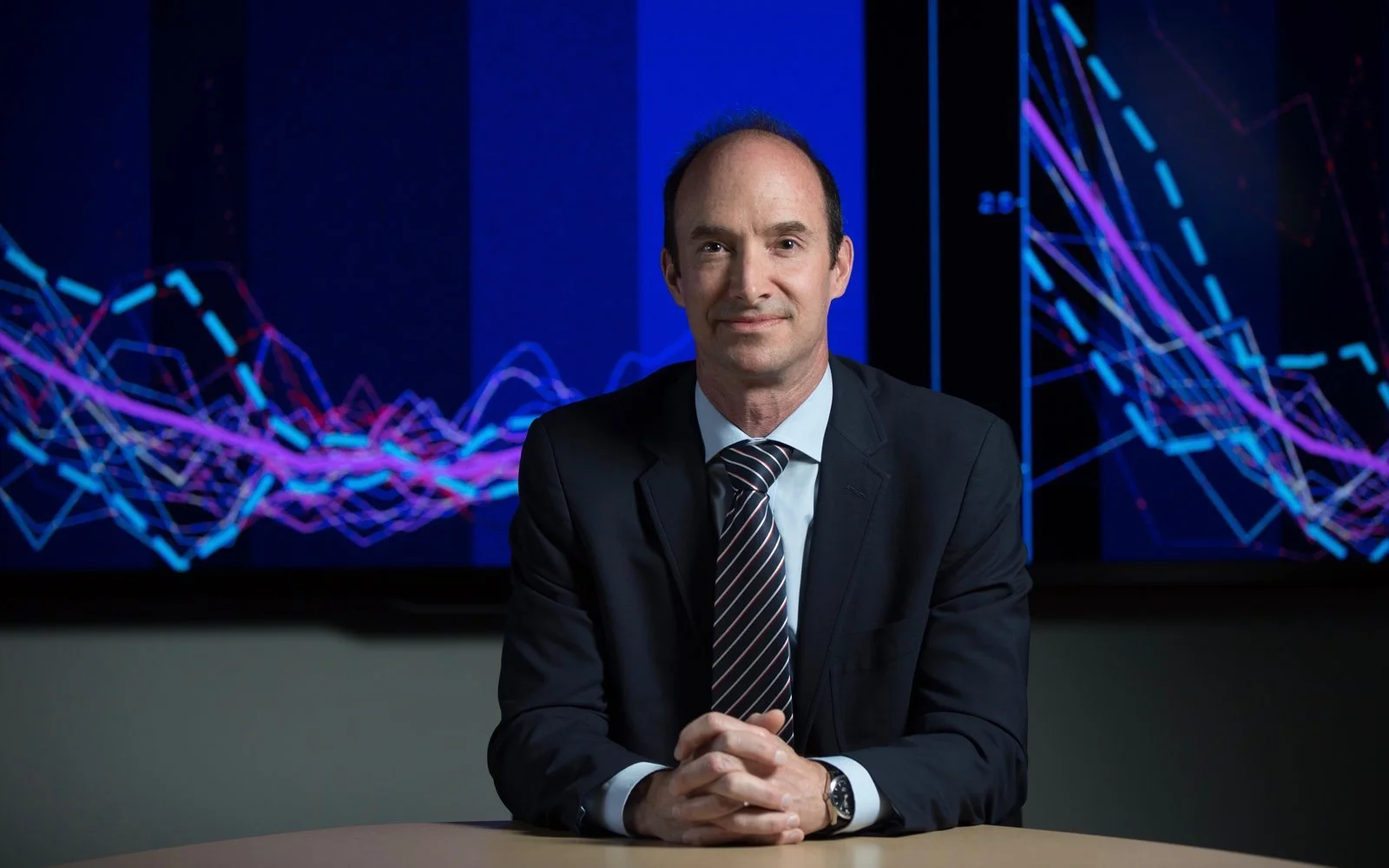
Mark Richardson, MD, PhD. Director of Functional Neurosurgery, MGH; Charles Pappas Professor of Neurosciences, Harvard Medical School; Visiting Professor of Brain and Cognitive Sciences, MIT.
Neurosurgery program staff.
Tatyana Pearson, Administrative Coordinator for Functional Neurosurgery
Ari Philbin, Physician Assistant for Functional Neurosurgery
How this guide is organized.
Is DBS right for me? When the timing is right, how the multidisciplinary evaluation works, and the improvement to expect for Parkinson's disease, dystonia, and essential tremor.
DBS surgery. The awake and asleep options for lead implantation, how to choose between them, and the second stage that implants the pulse generator.
Life after surgery. Recovery, programming, and long-term maintenance of the device.
Research. Our NIH-funded speech research during DBS surgery, and whether gene and cell therapies are a reason to wait.
Common questions. Risks, activity, travel, driving, imaging, medications, and battery life.